
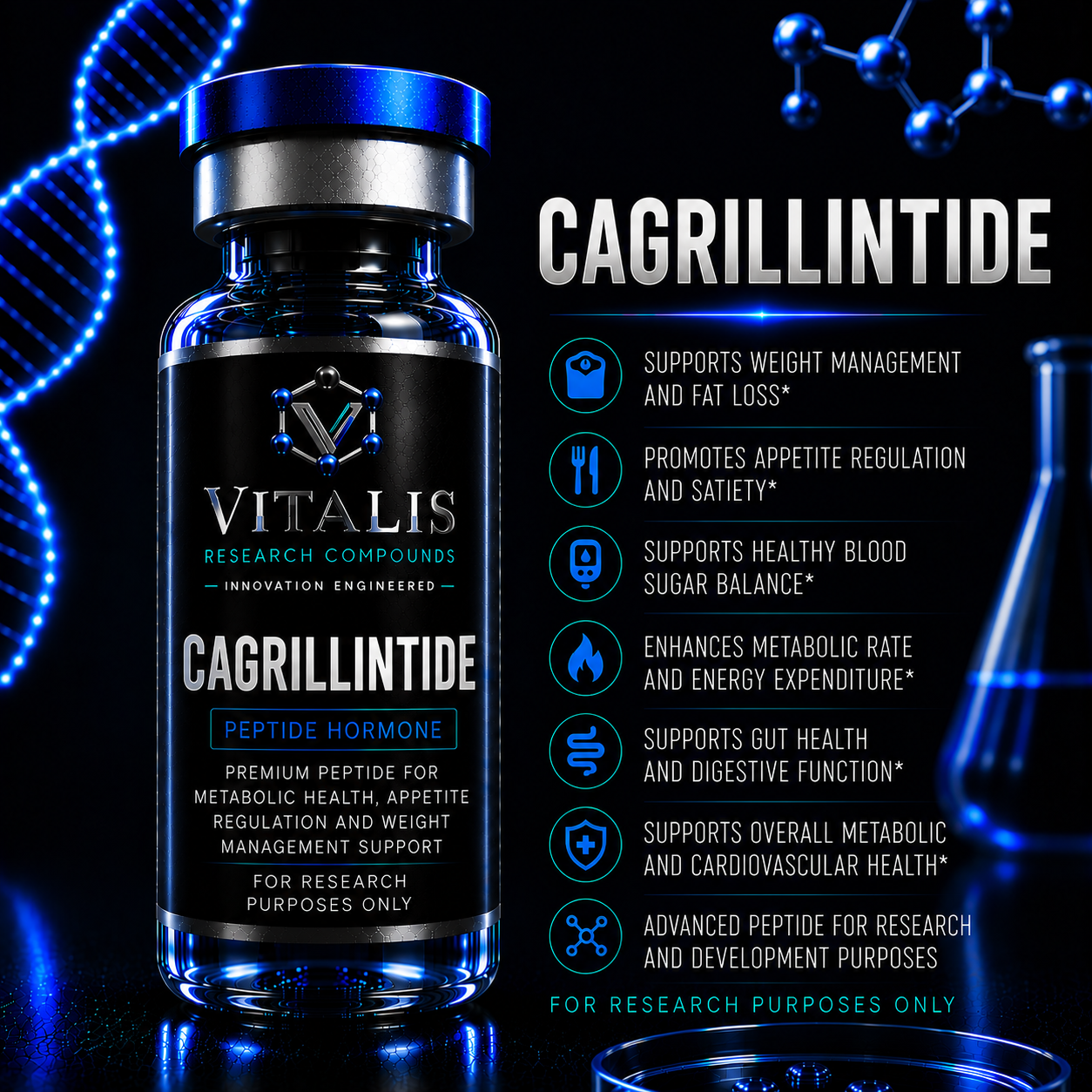
Long-Acting Amylin Analog
Cagrillintide
Cagrillintide is a long-acting amylin analog designed for sustained receptor engagement at amylin (IAPP) receptors. Preclinical and early clinical research has studied its role in appetite suppression via hypothalamic pathways, gastric emptying delay, and complementary effects when combined with GLP-1 receptor agonists. Its distinct mechanism from GLP-1 agonists makes it a valuable research tool in obesity, metabolic syndrome, and dual-mechanism weight regulation studies.
Research Benefits
Key Research Applications
Documented areas of investigation based on peer-reviewed preclinical and clinical literature. For research reference only.
Glucose Regulation
Modulates glucose-dependent insulin secretion and glycemic control pathways.
Energy Expenditure
Studied for effects on metabolic rate and energy homeostasis in preclinical models.
Body Weight Modulation
Investigated for appetite signaling and adipose tissue regulation mechanisms.
Cardiometabolic Health
Research has explored effects on lipid profiles, blood pressure, and cardiovascular markers.
Literature
Research Highlights
Amylin receptor agonism produces complementary appetite suppression to GLP-1 pathways
Gastric emptying delay studied in rodent metabolic models with sustained receptor engagement
Combination with semaglutide (CagriSema) showed additive weight reduction in Phase 2 trials
Hypothalamic satiety signaling via area postrema and nucleus tractus solitarius pathways
Specifications
Technical Data
Molecular Weight
~3900 g/mol (analog)
Sequence / Structure
Long-acting amylin analog — fatty acid conjugated for extended half-life
Storage Conditions
Lyophilized: −20°C, stable 24 months. Reconstituted: 4°C, use within 28 days.
Solubility
Soluble in 10mM PBS pH 7.4 at ≥1 mg/mL
HPLC Purity
Verified — Batch VRC-CAG-2407
Testing Lab
Eurofins Scientific · Jul 2026
Research Areas
Ready to Order Cagrillintide?
Cagrillintide is currently in stock. View pricing, sizes, and the full Certificate of Analysis on the product page.
For Research Purposes Only. Cagrillintide is sold exclusively for in vitro laboratory research. Not for human consumption, diagnostic, therapeutic, or veterinary use. Research highlights are summaries of published preclinical and clinical studies and do not constitute medical advice or claims of efficacy. See our Research Use Disclaimer.