
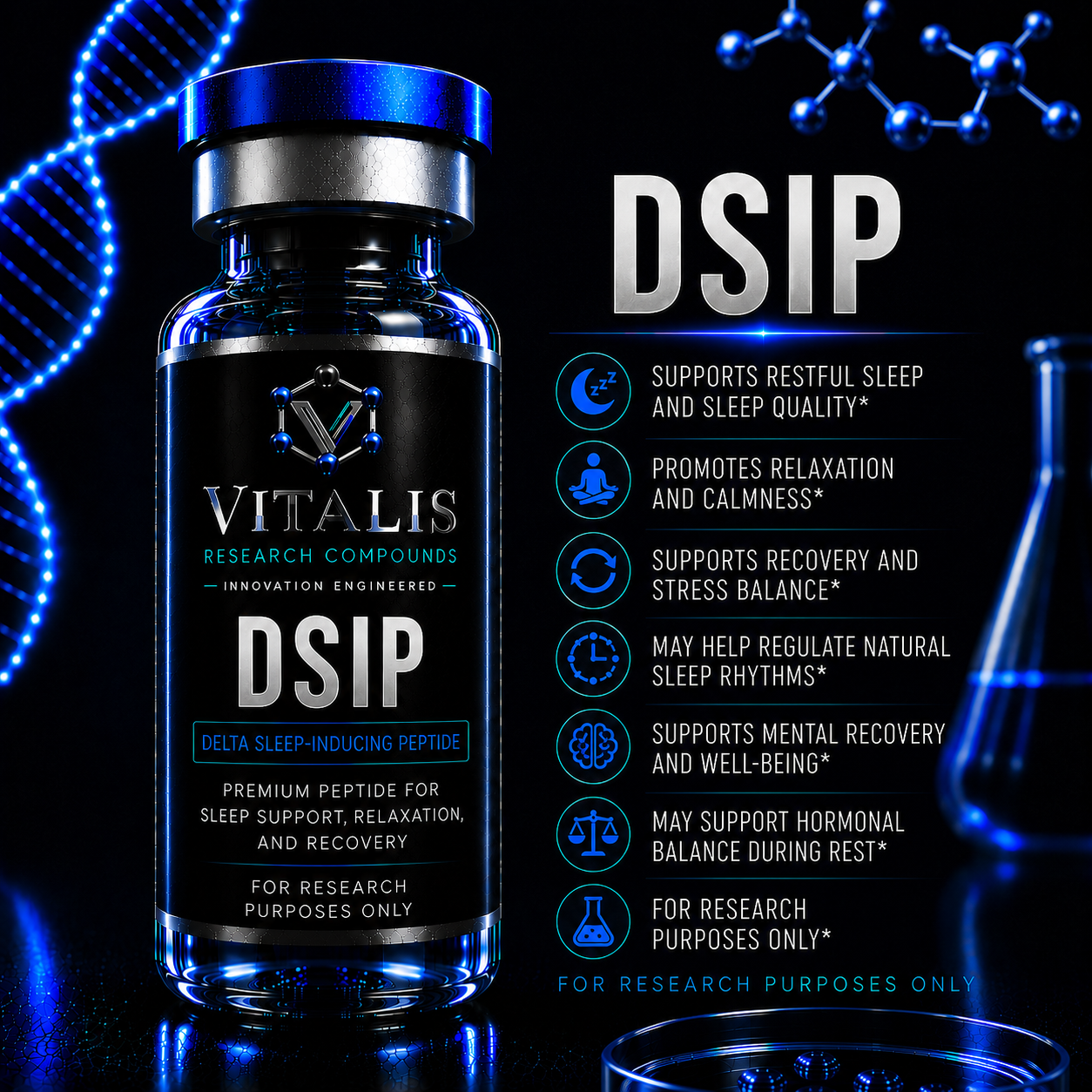
Delta Sleep-Inducing Peptide
DSIP
DSIP (Delta Sleep-Inducing Peptide) is a nonapeptide originally isolated from rabbit cerebral venous blood during slow-wave sleep. Preclinical research has investigated its role in modulating sleep architecture, reducing stress-induced hormonal responses, and influencing the hypothalamic-pituitary axis. Studies have also explored its potential effects on pain perception, antioxidant activity, and neuroprotection. It is used as a research tool in sleep biology, neuroendocrinology, and stress physiology.
Research Benefits
Key Research Applications
Documented areas of investigation based on peer-reviewed preclinical and clinical literature. For research reference only.
Neuroprotection
Studied for protective effects against neuronal damage and ischemic injury in preclinical models.
BDNF Upregulation
Promotes brain-derived neurotrophic factor expression supporting neuronal health.
Cognitive Function
Investigated for effects on learning, memory, and cognitive performance in research models.
Neurotransmitter Modulation
Studied for effects on serotonin, dopamine, and GABAergic signaling pathways.
Literature
Research Highlights
Induction of slow-wave (delta) sleep patterns observed in rabbit and rat models (Schoenenberger et al., 1977)
Attenuation of stress-induced ACTH and corticosterone release in rodent studies
Antioxidant and neuroprotective properties studied in oxidative stress models
Modulation of hypothalamic-pituitary-adrenal axis activity in preclinical neuroendocrine research
Specifications
Technical Data
Molecular Weight
848.94 g/mol
Sequence / Structure
Trp-Ala-Gly-Gly-Asp-Ala-Ser-Gly-Glu
Storage Conditions
Lyophilized: −20°C, stable 24 months. Reconstituted: 4°C, use within 14 days.
Solubility
Soluble in water at ≥1 mg/mL
HPLC Purity
Verified — Batch VRC-DSI-2407
Testing Lab
SGS Life Sciences · Jul 2026
Research Areas
Ready to Order DSIP?
DSIP is currently in stock. View pricing, sizes, and the full Certificate of Analysis on the product page.
For Research Purposes Only. DSIP is sold exclusively for in vitro laboratory research. Not for human consumption, diagnostic, therapeutic, or veterinary use. Research highlights are summaries of published preclinical and clinical studies and do not constitute medical advice or claims of efficacy. See our Research Use Disclaimer.