
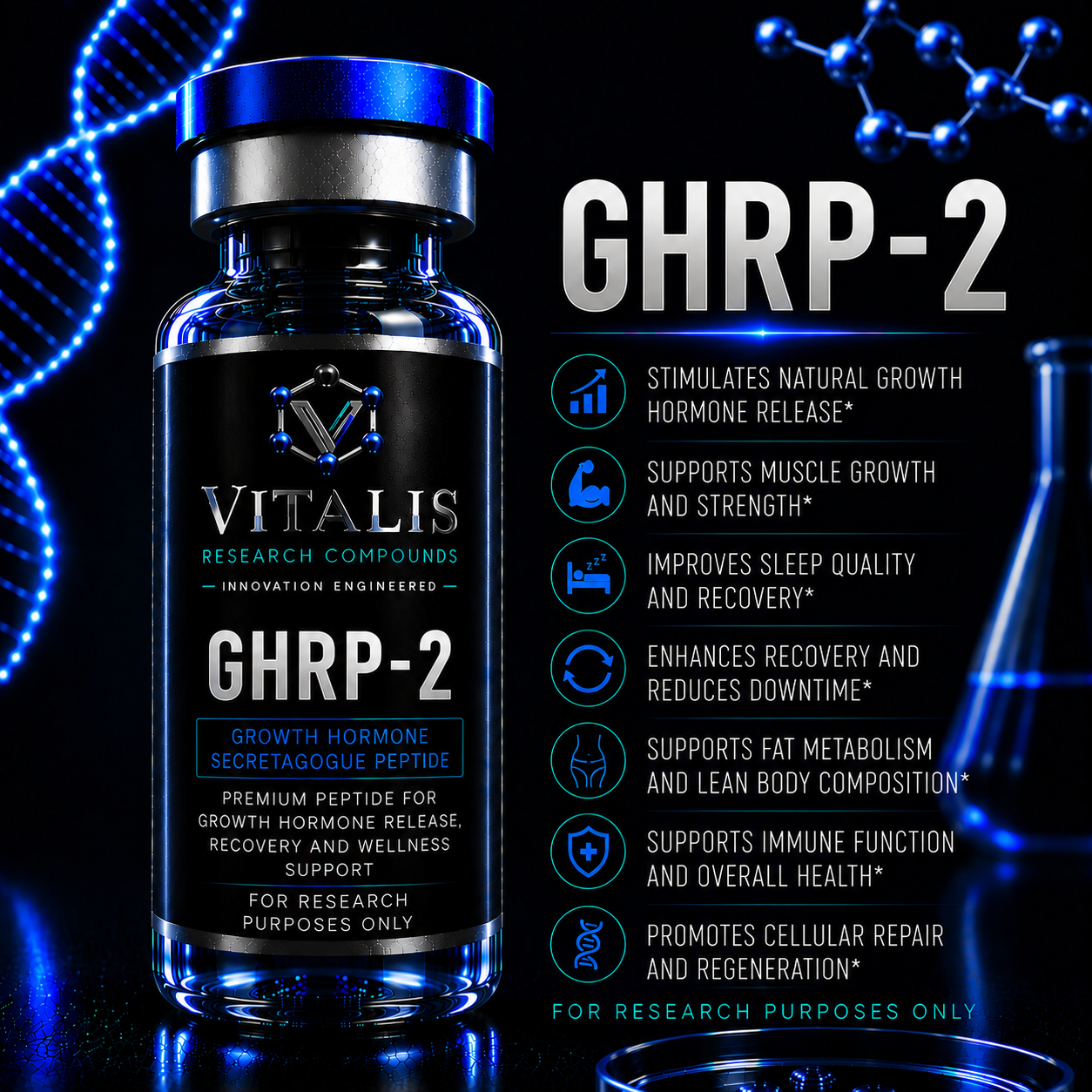
Growth Hormone Releasing Peptide-2
GHRP-2
GHRP-2 (Growth Hormone Releasing Peptide-2, pralmorelin) is a synthetic hexapeptide agonist of the ghrelin/growth hormone secretagogue receptor (GHS-R1a). It is one of the most potent GH secretagogues studied, producing robust GH release via both direct pituitary stimulation and hypothalamic GHRH amplification. Unlike Ipamorelin, GHRP-2 also stimulates appetite and has modest effects on cortisol and prolactin at higher doses. It is used as a reference GHS-R agonist in GH axis, appetite regulation, and ghrelin pathway research.
Research Benefits
Key Research Applications
Documented areas of investigation based on peer-reviewed preclinical and clinical literature. For research reference only.
GH Axis Stimulation
Promotes natural, pulsatile growth hormone release from the anterior pituitary.
IGF-1 Elevation
Supports insulin-like growth factor-1 production for downstream anabolic signaling.
Body Composition
Studied for effects on lean mass, adipose tissue, and metabolic rate in research models.
Bone Density
Investigated for bone mineral density support in GH-deficient preclinical models.
Literature
Research Highlights
Potent GHS-R1a agonist producing robust GH release in rodent and human studies (Bowers et al.)
Dual mechanism: direct pituitary stimulation and hypothalamic GHRH amplification
Appetite stimulation via ghrelin pathway activation studied in feeding behavior models
Reference compound for GHS-R binding assays and GH secretagogue comparison studies
Specifications
Technical Data
Molecular Weight
817.94 g/mol
Sequence / Structure
D-Ala-D-β-Nal-Ala-Trp-D-Phe-Lys-NH₂
Storage Conditions
Lyophilized: −20°C, stable 24 months. Reconstituted: 4°C, use within 28 days.
Solubility
Soluble in water at ≥1 mg/mL
HPLC Purity
Verified — Batch VRC-GH2-2407
Testing Lab
Intertek Pharmaceutical Services · Jul 2026
Research Areas
Ready to Order GHRP-2?
GHRP-2 is currently in stock. View pricing, sizes, and the full Certificate of Analysis on the product page.
For Research Purposes Only. GHRP-2 is sold exclusively for in vitro laboratory research. Not for human consumption, diagnostic, therapeutic, or veterinary use. Research highlights are summaries of published preclinical and clinical studies and do not constitute medical advice or claims of efficacy. See our Research Use Disclaimer.