
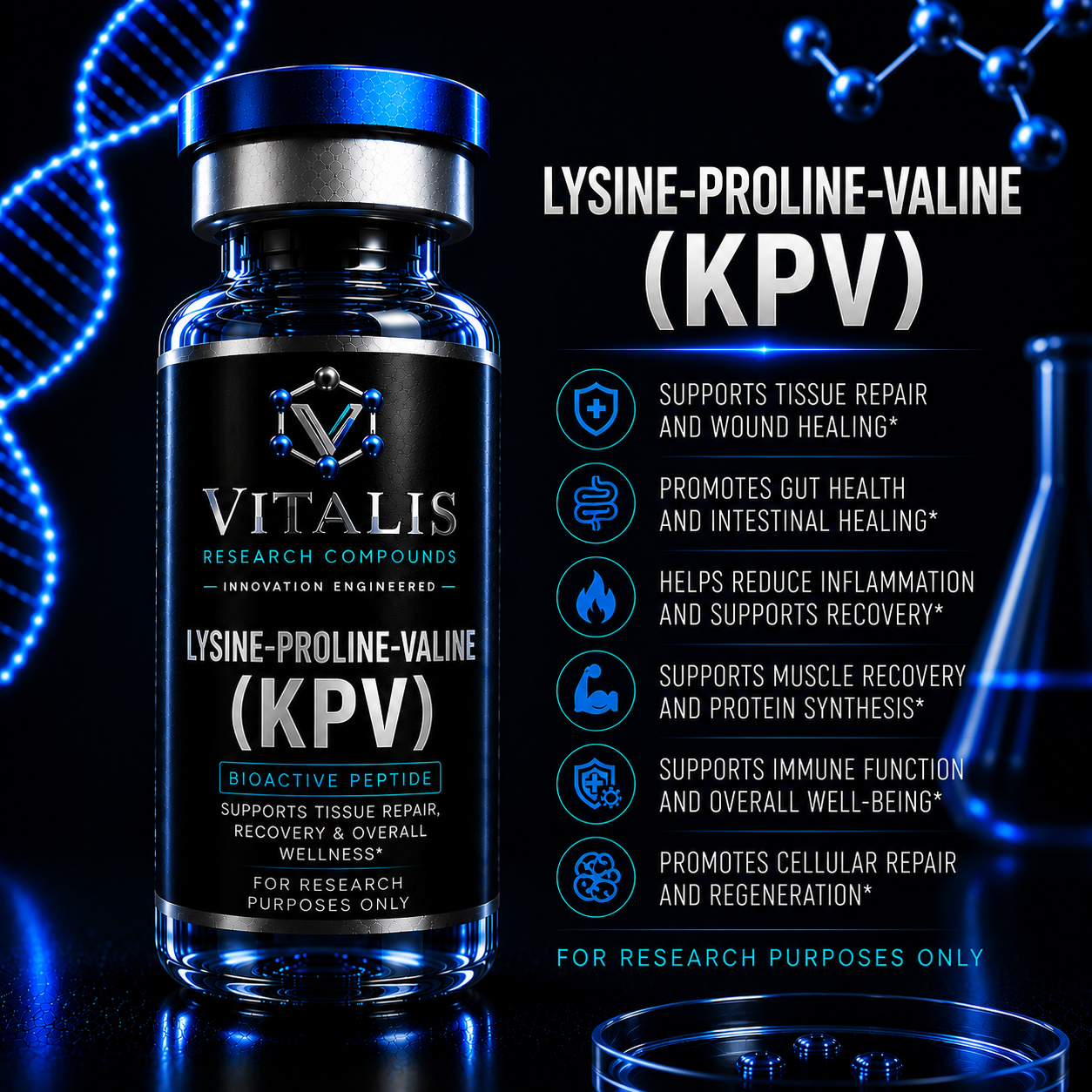
Lysine-Proline-Valine Tripeptide
KPV
KPV (Lys-Pro-Val) is the C-terminal tripeptide of α-melanocyte-stimulating hormone (α-MSH), representing the minimal active sequence responsible for its anti-inflammatory properties. Unlike full-length α-MSH, KPV exerts its effects through both melanocortin receptor-dependent and independent pathways. Preclinical research has studied its potent anti-inflammatory activity in models of inflammatory bowel disease, colitis, skin inflammation, and wound healing. Its small size enables efficient cellular uptake and gut epithelial penetration, making it a valuable research tool in mucosal immunity and barrier function studies.
Research Benefits
Key Research Applications
Documented areas of investigation based on peer-reviewed preclinical and clinical literature. For research reference only.
Accelerated Healing
Supports rapid tissue repair and wound closure mechanisms in preclinical models.
Cellular Regeneration
Promotes cellular migration and proliferation essential for tissue regeneration.
Anti-Inflammatory
Modulates inflammatory pathways to support the healing environment.
Structural Integrity
Supports collagen synthesis and extracellular matrix remodeling.
Literature
Research Highlights
Potent anti-inflammatory effects in DSS-induced colitis rodent models (Kannengiesser et al., 2008)
Gut epithelial barrier protection via tight junction protein upregulation in vitro
Melanocortin receptor-independent NF-κB suppression observed in macrophage assays
Skin inflammation reduction in contact hypersensitivity and wound healing models
Specifications
Technical Data
Molecular Weight
341.41 g/mol
Sequence / Structure
Lys-Pro-Val
Storage Conditions
Lyophilized: −20°C, stable 24 months. Reconstituted: 4°C, use within 28 days.
Solubility
Soluble in water at ≥5 mg/mL
HPLC Purity
Verified — Batch VRC-KPV-2407
Testing Lab
SGS Life Sciences · Jul 2026
Research Areas
Ready to Order KPV?
KPV is currently in stock. View pricing, sizes, and the full Certificate of Analysis on the product page.
For Research Purposes Only. KPV is sold exclusively for in vitro laboratory research. Not for human consumption, diagnostic, therapeutic, or veterinary use. Research highlights are summaries of published preclinical and clinical studies and do not constitute medical advice or claims of efficacy. See our Research Use Disclaimer.