
Thymic Peptide Bioregulator
Thymalin
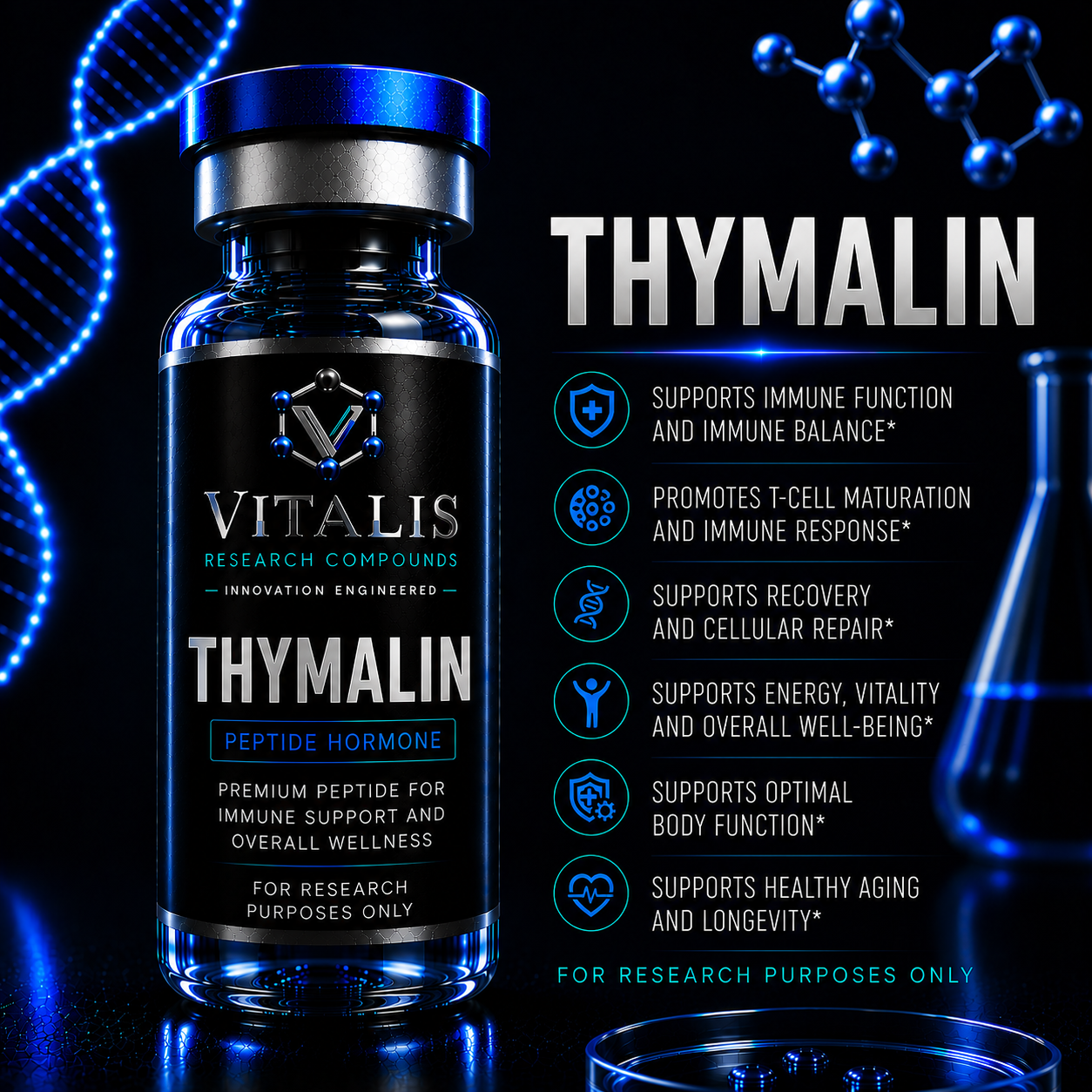
Thymalin is a polypeptide bioregulator derived from the thymus gland, developed at the St. Petersburg Institute of Bioregulation and Gerontology. It is a complex of low-molecular-weight peptides that regulate thymic function and T-cell maturation. Preclinical and clinical research in Russia has studied its role in restoring immune function in aging, reversing thymic involution, enhancing T-cell proliferation and differentiation, and modulating cytokine production. It is used as a research tool in immunogerontology, thymic biology, and age-related immune decline studies.
Research Benefits
Key Research Applications
Documented areas of investigation based on peer-reviewed preclinical and clinical literature. For research reference only.
Telomere Biology
Studied for telomerase activation and telomere length maintenance in aging research.
Cellular Energy
Supports mitochondrial function and NAD+ dependent metabolic pathways.
DNA Repair
Investigated for PARP-mediated DNA damage repair and genomic stability.
Oxidative Stress
Modulates antioxidant defense systems and reactive oxygen species in aging models.
Literature
Research Highlights
T-cell proliferation and differentiation restoration in aged rodent thymic involution models
Immune function improvement in elderly subjects studied in Russian clinical research (Khavinson et al.)
Cytokine profile normalization observed in age-related immunodeficiency models
Thymic microenvironment restoration via epithelial cell activation studied in vitro
Specifications
Technical Data
Molecular Weight
Variable (polypeptide complex)
Sequence / Structure
Thymic polypeptide complex — low-molecular-weight fraction
Storage Conditions
Lyophilized: −20°C, stable 24 months. Reconstituted: 4°C, use within 28 days.
Solubility
Soluble in sterile saline at ≥1 mg/mL
HPLC Purity
Verified — Batch VRC-THY-2407
Testing Lab
SGS Life Sciences · Jul 2026
Research Areas
Ready to Order Thymalin?
Thymalin is currently in stock. View pricing, sizes, and the full Certificate of Analysis on the product page.
For Research Purposes Only. Thymalin is sold exclusively for in vitro laboratory research. Not for human consumption, diagnostic, therapeutic, or veterinary use. Research highlights are summaries of published preclinical and clinical studies and do not constitute medical advice or claims of efficacy. See our Research Use Disclaimer.