
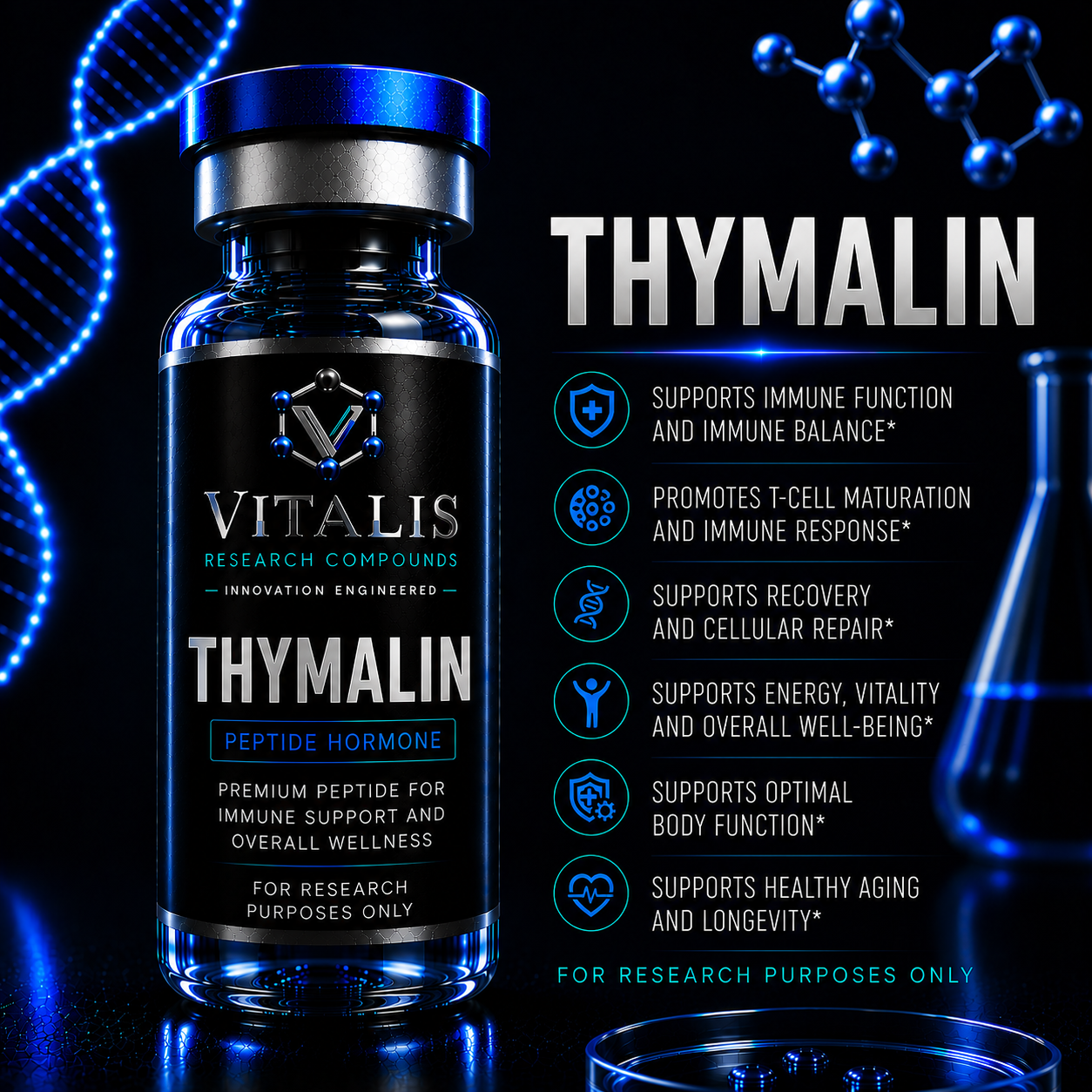
Thymic Peptide Bioregulator
Thymalin
Thymic peptide bioregulator studied for immune system restoration, T-cell function, and thymic involution reversal in aging and immunology research.
Select Size
Tested by: SGS Life Sciences · Batch: VRC-THY-2407 · Jul 2026
About Thymalin
Thymalin is a polypeptide bioregulator derived from the thymus gland, developed at the St. Petersburg Institute of Bioregulation and Gerontology. It is a complex of low-molecular-weight peptides that regulate thymic function and T-cell maturation. Preclinical and clinical research in Russia has studied its role in restoring immune function in aging, reversing thymic involution, enhancing T-cell proliferation and differentiation, and modulating cytokine production. It is used as a research tool in immunogerontology, thymic biology, and age-related immune decline studies.
Research Areas
Technical Specifications
Molecular Weight
Variable (polypeptide complex)
Amino Acid Sequence
Thymic polypeptide complex — low-molecular-weight fraction
Storage
Lyophilized: −20°C, stable 24 months. Reconstituted: 4°C, use within 28 days.
Solubility
Soluble in sterile saline at ≥1 mg/mL


For Research Purposes Only. Thymalin is sold exclusively for in vitro laboratory research. Not for human consumption, diagnostic, therapeutic, or veterinary use. See our Research Use Disclaimer.